
Beyond The Battlefield: The Indo-Lanka Accord & The Strategic Limits Of Residual Narratives
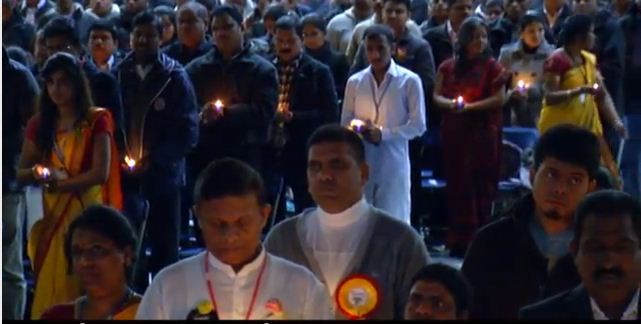 Photo: Colombo Telegraph
AI summary · 1 min read
1 min readFrom 1 outlets- Colombo Telegraph says the 1987 accord set out a political settlement based on devolving power.
- Colombo Telegraph reports that the agreement led to provincial councils and the Thirteenth Amendment.
- Colombo Telegraph says India committed to preventing its territory from being used against Sri Lanka’s unity, sovereignty and territorial integrity.
- Colombo Telegraph describes renewed circulation of arguments about self-determination, Tamil rights and the meaning of the 2009 military outcome.
Colombo Telegraph reports that commemorative events are being prepared overseas and, on a smaller scale, in Sri Lanka, as two arguments about Tamil self-determination circulate again. The article describes one as linking wartime deaths and loss of sovereignty to a continuing claim for a separate state, and the other as arguing that peaceful advocacy for Tamil rights should not be treated as extremism.
Colombo Telegraph situates these arguments within the Indo-Sri Lanka Accord, signed on 29 July 1987 by Sri Lankan President J.R. Jayewardene and Indian Prime Minister Rajiv Gandhi. The outlet says the agreement described Sri Lanka as a society with multiple ethnic and language communities and committed both governments to seek a negotiated settlement through the transfer of powers.
Colombo Telegraph reports that the accord established the basis for provincial councils and directly prompted the Thirteenth Amendment to Sri Lanka’s Constitution. The outlet says India agreed to ensure its territory was not used for actions harmful to Sri Lanka’s unity, sovereignty or territorial integrity, and that an Indian Peace Keeping Force was sent to Sri Lanka.
Colombo Telegraph characterises the accord as an effort to address an intensifying conflict through constitutional power-sharing. The article also notes that Tamil nationalist sentiment continues to find expression through newer organisations, but the supplied report provides no further details on those groups or the accord’s later implementation.
Your take
Be the first to reactDiscussion
Readers' views on this storyStory alerts
Get an email when an outlet reports something new on this story.